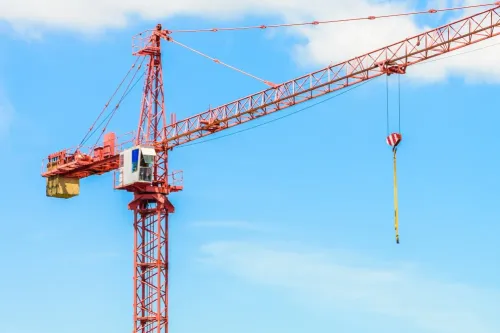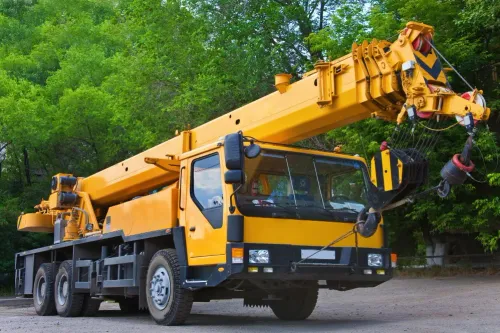



A successful crane lift starts long before the load leaves the ground. For complex operations, lift planning brings together information about the load, crane, rigging, site, working radius, surrounding hazards, and sequence of work.
Organizations requiring lift planning services in Bangalore should understand that planning is not simply administrative documentation. It is a practical process for identifying how a lifting activity can be executed in a controlled manner.
What Does Lift Planning Consider?
The scope depends on the complexity of the job, but typical considerations include:
- Load weight and dimensions
- Centre of gravity where relevant
- Lifting points
- Crane capacity and configuration
- Working radius
- Boom length
- Rigging requirements
- Ground conditions
- Crane positioning
- Nearby structures and hazards
- Load travel path
- Personnel responsibilities
These factors are interconnected. Changing crane position, for example, can change the working radius and therefore affect available lifting capacity.
Why Site Information Matters
Lift planning based on incomplete site information can create avoidable complications.
Restricted entry points, overhead lines, buildings, excavations, underground services, operating machinery, or limited setup space may affect the lifting approach.
This is particularly relevant across Bangalore, where projects range from open construction developments to congested commercial and industrial environments.
Complex Loads Need Greater Attention
Not every load behaves like a compact, evenly balanced object.
Long fabricated structures, machinery, vessels, equipment assemblies, and irregular components may require additional consideration of balance, orientation, rigging, and movement.
The planned lifting method should reflect the actual characteristics of the load.
Coordination Reduces On-Site Confusion
Everyone involved should understand the sequence before lifting begins.
Depending on the project, coordination may involve the crane operator, rigging team, signal personnel, site supervisor, safety team, contractor, and customer representatives.
Clear roles and communication methods can help prevent conflicting instructions during the lift.
When Should Businesses Request Lift Planning?
Lift planning becomes particularly valuable when loads are heavy, valuable, unusually shaped, positioned in restricted areas, or being moved in proximity to structures and operating facilities.
Vaiking Cranes can support customers by reviewing lifting requirements before crane deployment, helping align equipment selection with the intended operation.
For projects in Bangalore, Karnataka, preparation is especially important where space, access, traffic, industrial operations, or construction activity create additional constraints.
A crane may provide the physical lifting capability, but planning determines how that capability is applied. Taking time to assess the load, equipment, site, rigging, and sequence before mobilization can contribute significantly to a more organized lifting operation.